Adoa News Adoa News

Related Articles



An analysis of accommodation costs has revealed extraordinary price surges in the cities slated to host the 2026 FIFA World Cup. Following the confirmation of the tournament schedule, hotels across the United States, Canada, and Mexico have implemented an increased rate for the period of the event. Data indicates that room rates around opening matches in the 16 host cities have climbed by an average of more than 300 percent compared to typical seasonal prices. This trend underscores the immense commercial pressure and anticipated demand accompanying the World Cup
The scale of the increase is particularly striking in specific markets. For instance, an examination of booking platforms shows one hotel in Mexico City, which commands approximately $157 per night in late May of this year, listing rooms for $3,882 on June 10 and 11, 2026. These dates coincide with the tournament’s opening match, where the host nation, Mexico, is scheduled to play South Africa at the iconic Estadio Azteca. This represents a 2,373 percent increase, a figure that highlights the premium being placed on proximity to key fixtures.
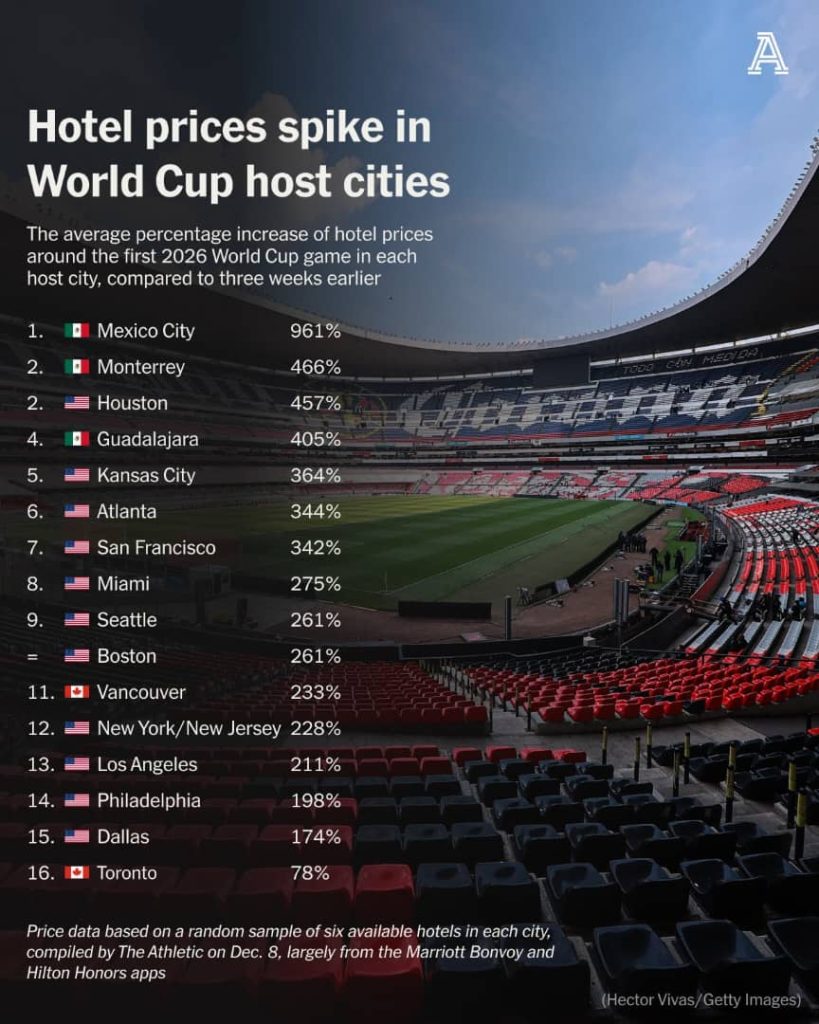
This pattern of repricing is not isolated but is being replicated in major host cities across North America. From New York and Los Angeles to Toronto and Vancouver, hospitality providers are adjusting their rates to reflect the unprecedented influx of visitors expected for the month-long tournament. The 2026 World Cup, the first to feature an expanded format of 48 teams, is projected to draw millions of international fans, creating a severe strain on accommodation infrastructure and enabling a seller’s market for available lodging.
The increments in costs presents a significant challenge for traveling supporters and raises broader questions about affordability and accessibility at major global events. While tournament organizers often emphasize the economic benefits for host nations, the immediate financial impact on fans seeking accommodation is profound. As the event approaches, attention will likely intensify on how local governments and the hospitality industry manage capacity and pricing to balance commercial opportunity with the fan experience.