 Adoa News Adoa News
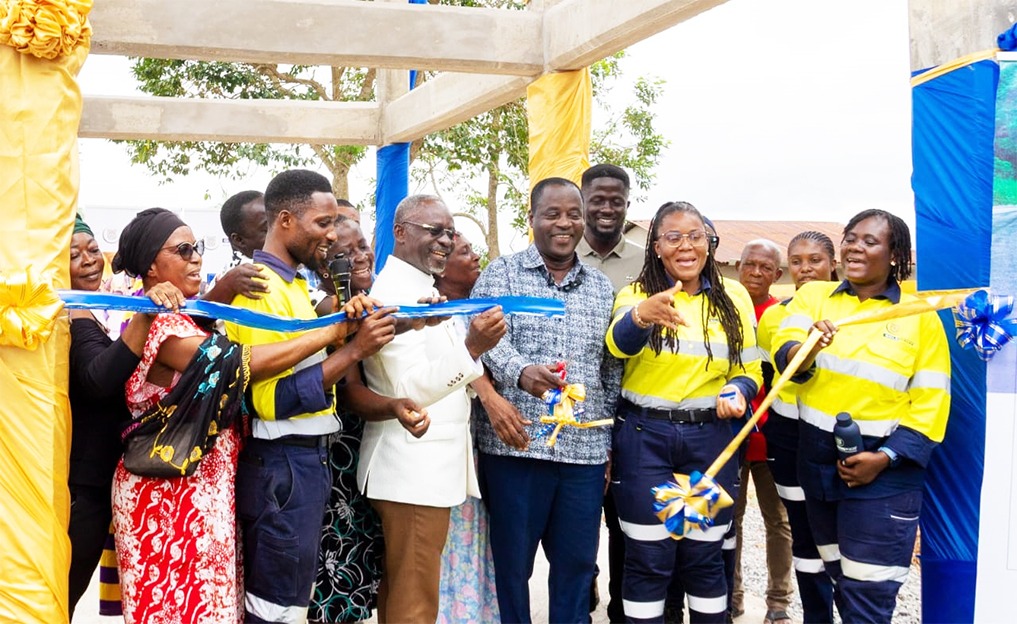
Residents of Brahabobom in the Tarkwa-Nsuaem Municipality have received a major boost in access to potable water following the completion of a Small-Town Water Supply System (STWSS) funded by the Gold Fields Ghana Foundation in partnership with the Tarkwa-Nsuaem Municipal Assembly (TNMA).
The facility, which was handed over on Wednesday, September 16, 2026, is expected to provide residents with a more reliable source of safe water while reducing the difficulties associated with fetching water.
At the centre of the project is a 40,000-litre water storage facility supported by two mechanised boreholes and four standpipes.
The project was constructed at a cost of GH¢616,858.39 and is expected to provide water for drinking, cooking, sanitation and other domestic needs.
The Chief of Brahabobom, Nana Kwesi Ansah, said the project had come at an important time, noting that access to potable water had been a major challenge for the community.
“Access to potable water has been a major challenge for our people, and this facility has come at a very important time,” he said.
According to Nana Ansah, the facility would not only improve access to water but also contribute to better health and hygiene among residents.
He expressed appreciation to the Gold Fields Ghana Foundation, the Tarkwa-Nsuaem Municipal Assembly and other stakeholders for their roles in making the project possible.
The Chief also called on residents to take responsibility for maintaining the facility to ensure that it remains functional for years to come.
«“As a community, we pledge to take ownership of the facility, use it responsibly and ensure that it is properly maintained for the benefit of present and future generations,” he said.»
Project Manager Sandra Deladem Woanyah said the initiative forms part of the Gold Fields Ghana Foundation’s broader efforts to provide essential infrastructure and improve living conditions in its host communities.
The project also highlights the role of collaboration between mining companies, local authorities and communities in addressing essential social needs.
With the installation of the 40,000-litre storage facility, two
mechanised boreholes and four standpipes, residents now have infrastructure that can provide a more dependable source of water for the community.
The initiative also supports the objectives of the United Nations Sustainable Development Goals, particularly SDG 6 on Clean Water and Sanitation, SDG 3 on Good Health and Well-being, and SDG 11 on Sustainable Cities and Communities.
For residents of Brahabobom, the ultimate impact of the project will be measured by its contribution to cleaner homes, improved sanitation, reduced hardship and more dependable access to safe water.