Adoa News Adoa News
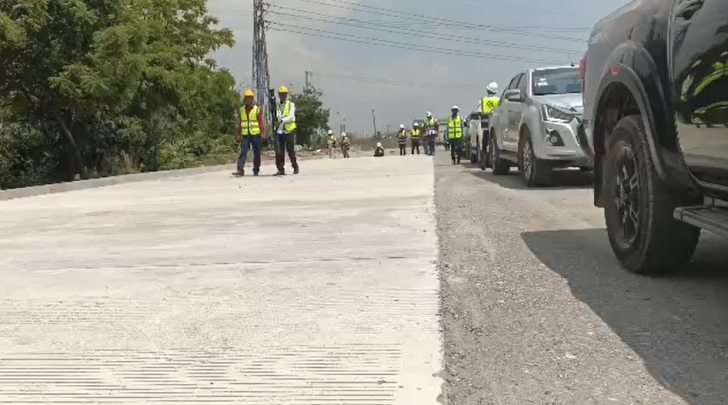
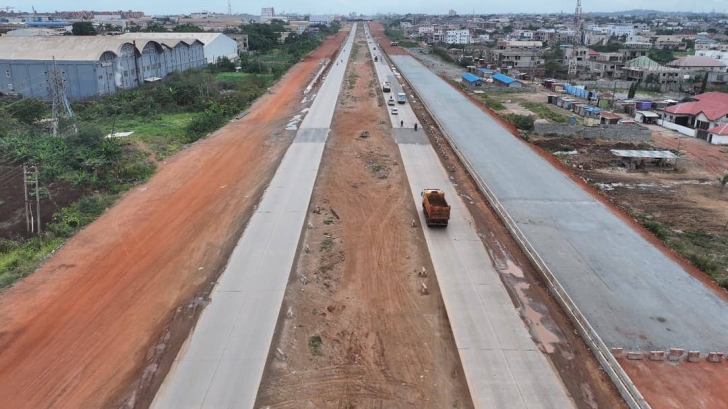
Construction on Section One of the Accra-Tema Motorway and Extensions Project has reached 53 per cent completion, with work progressing on road pavement, drainage systems, bridges and other critical infrastructure.
The US$339 million project is aimed at easing traffic congestion, improving urban mobility and strengthening trade connectivity along one of Ghana’s busiest transport corridors.
The project is being implemented in partnership with the Ministry of Roads and Highways and the Ghana Highway Authority, with Accra-Tema Expressway Limited (ATEL) serving as the concessionaire and Maripoma Enterprise Limited as the engineering, procurement and construction contractor.
The Chief Executive Officer of ATEL, Louis Harrison, said the project was designed to restore the motorway to a standard commensurate with its importance to Ghana’s economy.
Speaking at a media engagement and the official launch of ATEL’s website on Wednesday, October 28, 2026, Mr Harrison said the motorway, which was opened in 1965, now carries approximately 60,000 vehicles daily, significantly exceeding the traffic volumes anticipated at the time of its construction.
He noted that the road remained a critical transport link for commuters, businesses and freight operators travelling between Accra and Tema, the country’s principal industrial centre and port city.
30-Year Concession to Support Reconstruction
Mr Harrison explained that the project was being undertaken under a 30-year public-private partnership (PPP) toll-road concession, which requires ATEL to finance, reconstruct, expand, operate and maintain the motorway and its extensions in collaboration with the government.
He said the Ghana Infrastructure Investment Fund (GIIF) was sponsoring the project, describing the arrangement as an example of how institutional and private-sector capital could support major infrastructure investments without placing the entire financial burden on the state.
On financing, Mr Harrison put the overall funding requirement at approximately US$380 million, noting that the final financing structure would depend partly on the toll rate to be approved.
Although the concession agreement has received parliamentary approval, he said the specific toll amount had yet to be determined and would be submitted to Parliament for consideration.
ATEL is also exploring local-currency financing arrangements with domestic banks to minimise exposure to foreign-exchange risks, alongside potential long-term financing from pension funds for subsequent phases of the project.
Mr Harrison disclosed that procurement preparations for Sections Two and Three were underway, with plans to overlap their implementation to keep the overall programme within 48 months.
He also announced the launch of the project’s website, which is expected to provide regular information on construction progress, traffic diversions, project milestones and road safety notices.
Construction Progress and Road Design
The Chief Resident Engineer on the ATEL project, Kwabena Bempong, said construction had reached approximately 53 per cent completion after 805 days of work, although progress remained slightly behind schedule.
He expressed confidence that the contractor, Maripoma Enterprise Limited, would accelerate construction to meet the scheduled August 2027 completion date.
According to Mr Bempong, work began in August 2024, with the overall project covering approximately 27.7 kilometres. This comprises a 19.5-kilometre section currently under construction, a 5.7-kilometre stretch between Tetteh Quarshie and Apenkwa, and a 2.5-kilometre section of the N6 near the Tesano Police Station towards Achimota.
He explained that the first section would feature a two-lane, access-controlled expressway alongside an urban highway with three lanes in each direction. Selected sections would be expanded to five lanes in each direction to facilitate merging and movement between the two roads.
The project also includes improvements to interchanges at Tetteh Quarshie, Teshie, Community 18 and Lashibi, as well as pedestrian crossing facilities.
Mr Bempong said the interventions were expected to improve access between communities on either side of the motorway while reducing unsafe pedestrian crossings and turning movements.
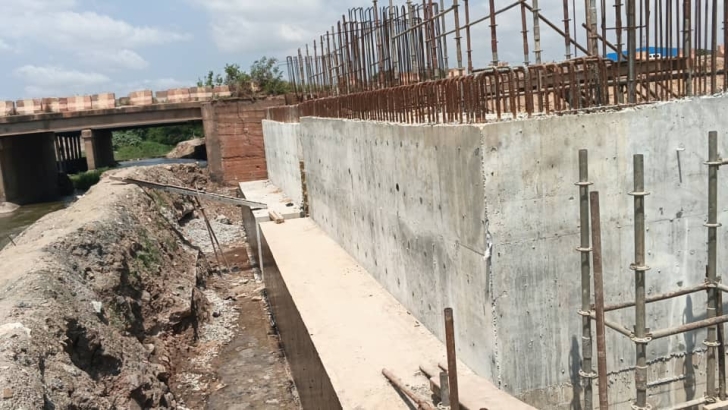
Other major components include 20 box culverts and three bridges, all at various stages of construction.
Site Inspection Reveals Progress on Major Structures
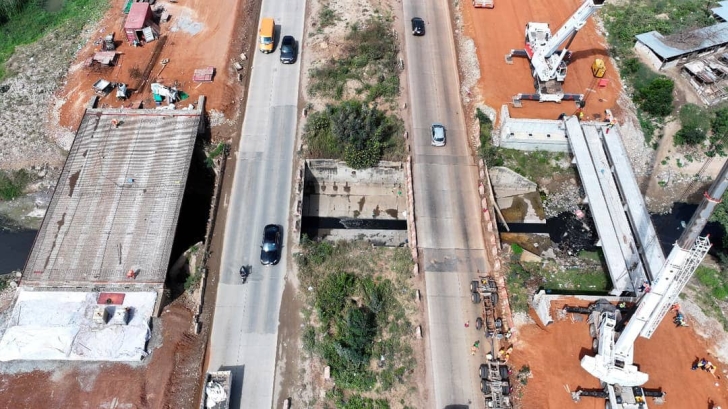
During a site inspection, Project Manager Benjamin Sackey reported that concrete structures were approximately 70 per cent complete.
He said about four kilometres of road base course had been laid and were ready for asphalt paving.
Seven footbridges were also at different stages of construction, while two bridges along the urban highway section had been completed. Two of the three interchanges were substantially complete, he added.
The progress, according to the project team, reflects ongoing work across the various road and structural components as the contractor works towards the August 2027 deadline.
GIIF Highlights Transparency Through New Website
The Deputy Managing Director for Investment at the Ghana Infrastructure Investment Fund, Bennett Akantoa, described the launch of the ATEL website as an important step towards improving public access to information about the motorway project.
He said the platform would promote transparency, strengthen public trust and provide updates on construction activities.
Mr Akantoa noted that the Accra-Tema Motorway had long served as a vital link between the national capital and Tema, facilitating the movement of people and goods between the two cities.
However, he said changing transport demands had made reconstruction necessary to improve the road’s capacity and efficiency.
He added that the project aligned with President John Dramani Mahama’s vision of improving road infrastructure across the country.
The website, he said, would also give media organisations and social media users access to information that could help them communicate developments more effectively.
Acknowledging public concerns about the length of time construction had taken and why the road remained unfinished, Mr Akantoa expressed hope that regular updates would help clarify the status of the works and give road users a better understanding of the project’s progress.
Financing Challenges and Project Phasing
David Ofosu-Dorte, Senior Partner at AB and David Africa and a member of the project’s Independent Project Advisory team, said the motorway project had undergone several financing and procurement processes since 2019 before the current PPP arrangement was established.
He explained that earlier assessments had identified a funding viability gap of nearly US$100 million, while the cancellation of road tolls in November 2021 had affected investor confidence.
According to Mr Ofosu-Dorte, the project was subsequently divided into phases to allow the first section to proceed and establish a foundation for financing the remaining sections.
The phased approach is expected to support the mobilisation of additional funding and enable subsequent stages to progress alongside the ongoing works.
When completed, the Accra-Tema Motorway and Extensions Project is expected to improve traffic flow, strengthen connections between Accra and Tema, and support the movement of passengers and freight along a corridor that is central to Ghana’s industrial and commercial activities.