 Adoa News Adoa News
The Deputy Minister for Finance, Thomas Nyarko Ampem, has disclosed that 35 contractors under the Agenda 111 received US$7.9 million in mobilisation funds but failed to mobilise to site or deliver work that matches the payments made to them.
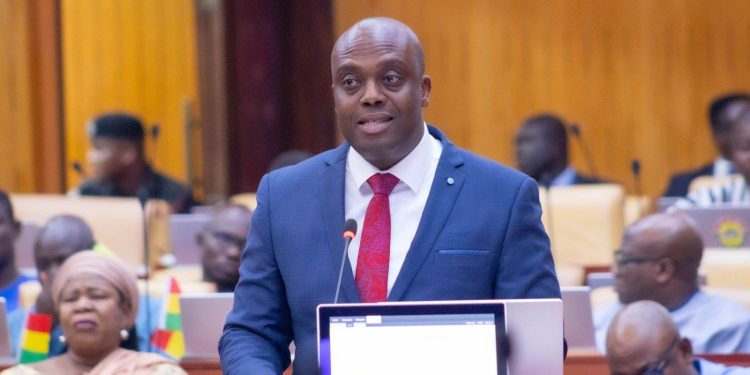
Presenting the Report of the Auditor-General on Arrears and Payables as at the end of 2024 in the chamber of the Parliament of Ghana on Tuesday, March 10, Mr Nyarko Ampem said an audit of projects under the Agenda 111 programme uncovered significant irregularities in how funds were utilised by some contractors.
According to him, the US$7.9 million was paid as advance mobilisation to enable contractors to commence construction works on hospital projects across the country.
However, the audit findings showed that some contractors had not mobilised to their respective sites, while in other cases, the work completed did not correspond to the value of the funds already disbursed.
“Mr Speaker, the audit of Agenda 111 projects also revealed that a total amount of US$7.9 million was paid to 35 contractors as advance mobilisation under the programme, but these contractors have either failed to mobilise to the site or the work done is not commensurate with the amount paid,” he said.
Mr Nyarko Ampem further disclosed that the advance mobilisation guarantees secured from the contractors at the time of payment have all expired, raising concerns about the government’s ability to immediately rely on those guarantees to recover the funds.
He noted that the Ghana Audit Service, led by the Auditor-General of Ghana, has issued notices of surcharge to the contractors involved, compelling them to refund the funds or provide justification for the payments received.
“The advance mobilisation guarantees secured by the 35 contractors who received the US$7.9 million have all expired. The Auditor-General has subsequently issued notices of surcharge to the offending contractors,” he added.
The Agenda 111 initiative, launched under former President Nana Addo Dankwa Akufo-Addo, seeks to construct district hospitals in underserved areas across the country. Each facility is designed to accommodate 100 beds and include residential quarters for medical staff, as part of efforts to improve access to healthcare nationwide.