 Adoa News Adoa News
The Archbishop of Canterbury, Most Rev.d & Rt. Hon. Dame Sarah Elizabeth Mullally DBE, has reaffirmed the Church of England’s commitment to its £100 million reparative justice fund, describing the institution’s involvement in the transatlantic slave trade as an undeniable part of its history that requires meaningful action.
Speaking during a visit to the historic Cape Coast Castle in Ghana, where millions of enslaved Africans were imprisoned before being transported across the Atlantic, Dame Sarah said the experience reinforced the Church’s responsibility to confront its past.

“We played a part in the transatlantic slave trade. That is clear. Part of the Christian belief in repentance is about action, so we are putting in place action to support those communities that feel the legacy of the slave trade,” she said.
The visit to Cape Coast Castle formed part of the Archbishop’s first pastoral visit to Africa since her installation as the spiritual leader of the Church of England at Canterbury Cathedral in March. Reparative justice has been a central focus of her engagements in Ghana.
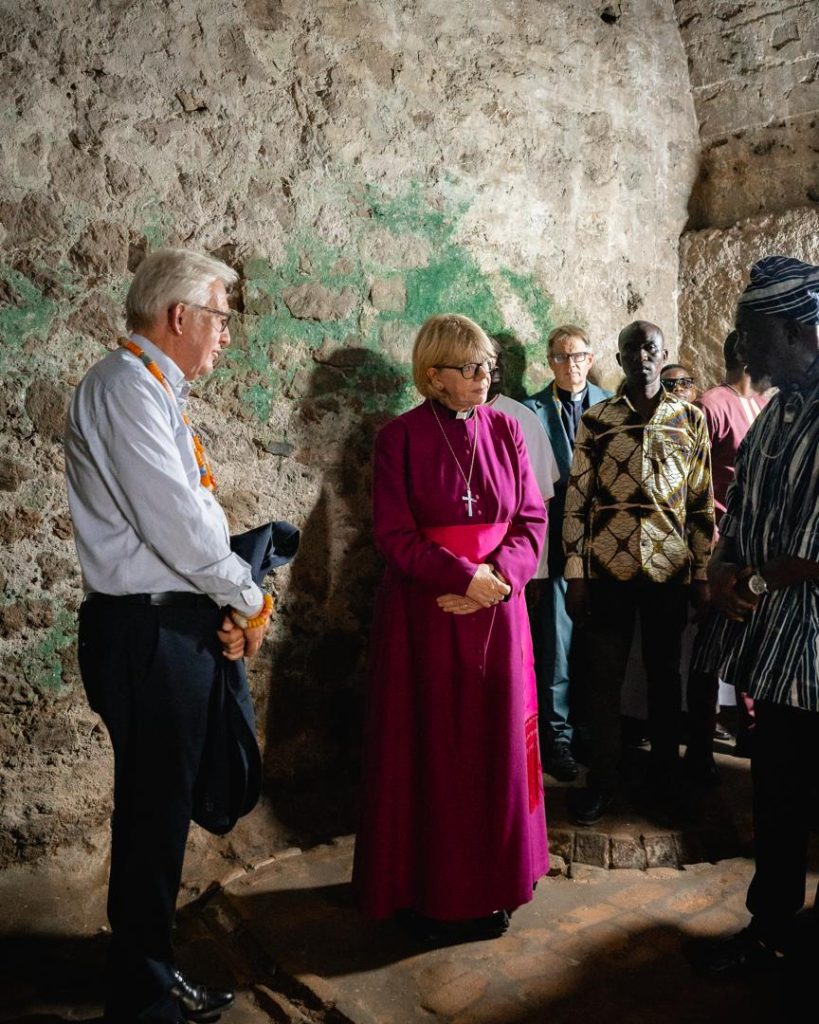
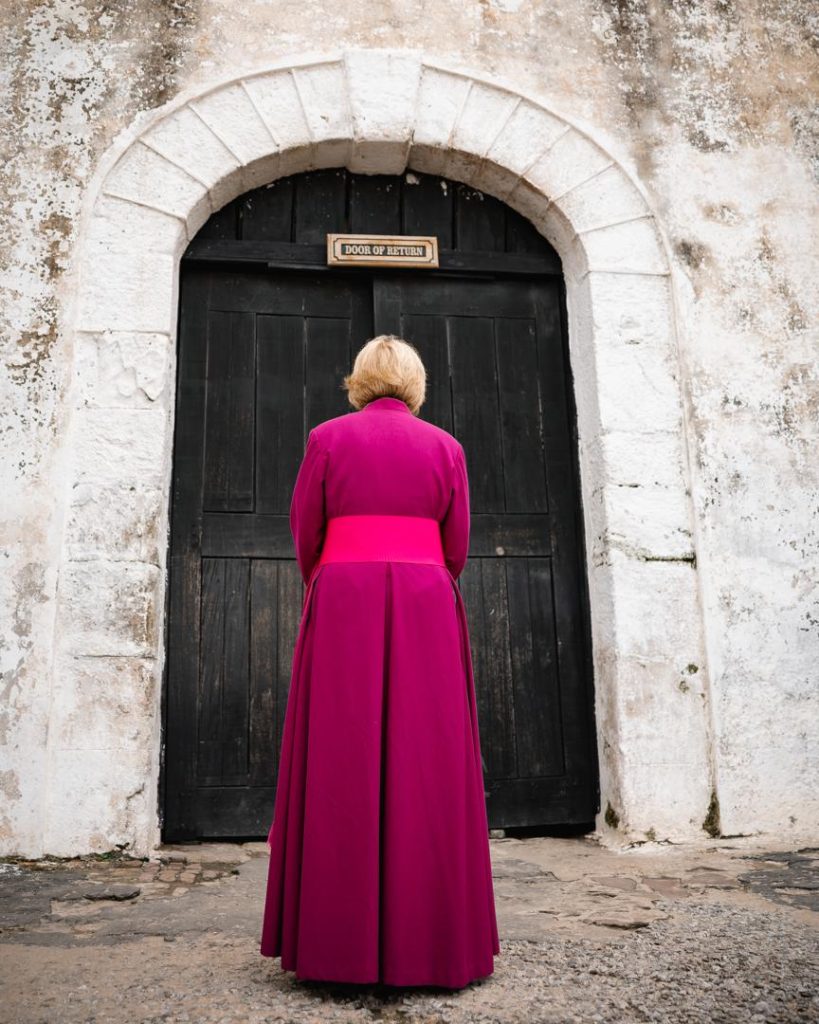
During the tour, Dame Sarah visited the dungeons where enslaved Africans were confined in inhumane conditions before passing through the infamous “Door of No Return” to slave ships bound for the Americas.
Reflecting on the visit, she described the experience as deeply emotional.
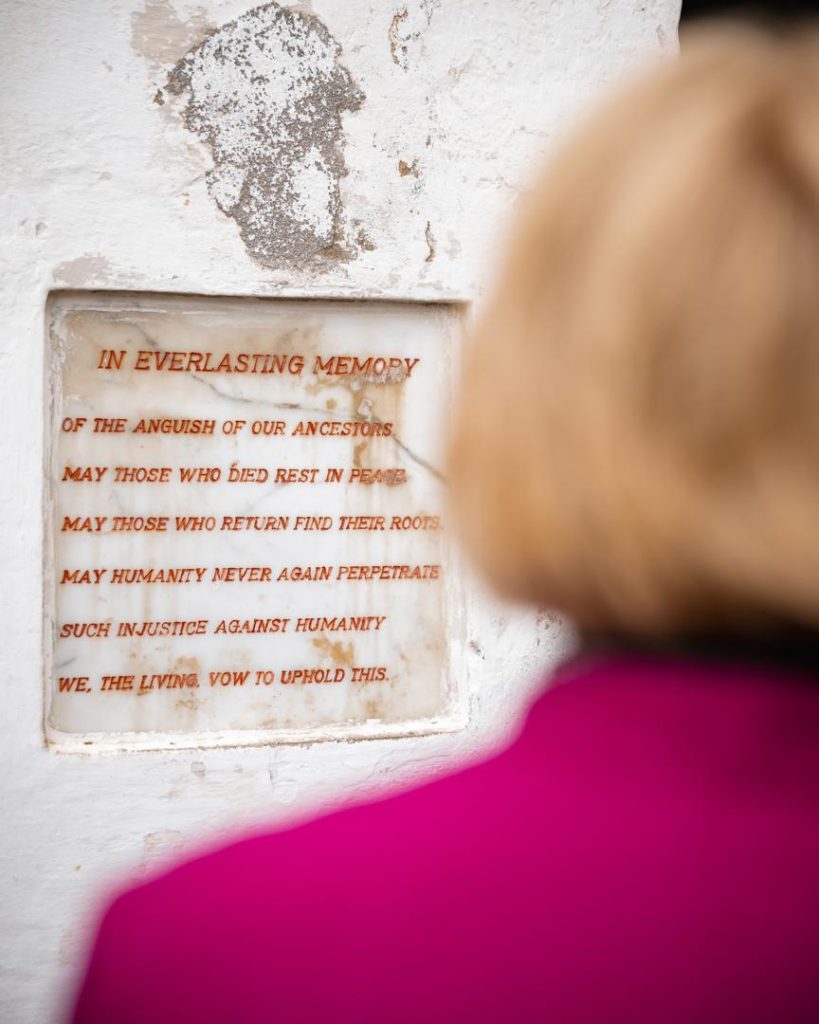
“You can’t help but be deeply moved by the horrific conditions that people were kept in and the way that they were treated.
“It completely throws you off balance and brings home the evil that was transatlantic slavery.”
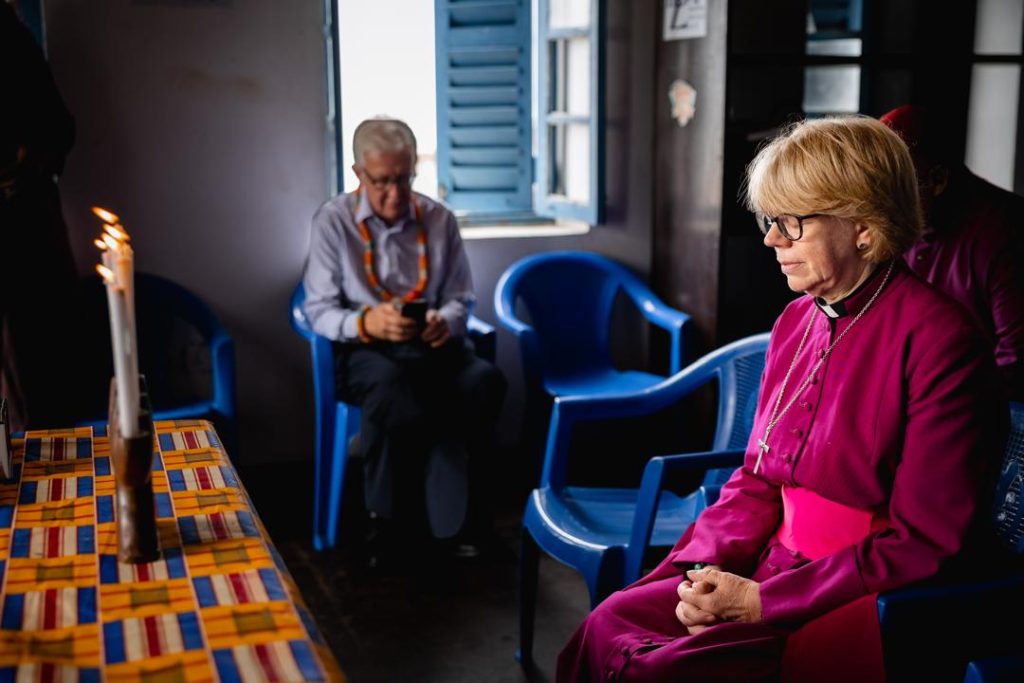
She also noted the significance of the chapel located directly above the slave dungeons, describing it as a powerful reminder of the Church’s historical involvement in the slave trade.
According to the Archbishop, the juxtaposition of Christian worship above the dungeons where enslaved people suffered highlighted the contradictions of that period and underscored the need for continued repentance and restorative action.
The Church of England has previously acknowledged and apologised for its links to the transatlantic slave trade. Historical records show that its missionary arm owned slave-worked plantations in the Caribbean to support missionary activities, while some clergy members owned enslaved people and the Church also benefited from donations connected to the slave trade.
In 2023, the Church announced the establishment of a £100 million fund dedicated to reparative justice after an independent review of its historical endowment revealed substantial investments linked to companies involved in the trafficking of enslaved Africans.
The fund is intended to support long-term investment, research and community engagement initiatives aimed at addressing the enduring social and economic consequences of slavery in affected communities.
The initiative, however, has generated debate within the Church of England and beyond. Critics have questioned the historical interpretation of the Church’s involvement, while others have raised legal and ideological concerns about the reparations programme.
Ghana has been at the forefront of global calls for reparations, urging countries and institutions that profited from the transatlantic slave trade to acknowledge their historical responsibility and support restorative initiatives.
Minister for Foreign Affairs, Samuel Okudzeto Ablakwa, praised Dame Sarah’s stance, describing her visit as an important step in advancing the global conversation on reparative justice.
“What the Archbishop of Canterbury is doing in Ghana on her current visit will begin to send the right signals. And those who are either revisionists or who are obstructionists within the Church of England are going to start thinking twice,” he said.
“The Christian religion which they brought to Ghana and Africa teaches us that without admission of sins, there can be no salvation. There can be no going to heaven.”